Patriots' Day

If I were Iran, I’d want a nuclear bomb too. I hope it never gets one because I think moving toward denuking the world – and particularly the Middle East – seems a better avenue to stability than arming it to the teeth, as the U.S. seems intent doing. According to Mark Mazzetti and Helene Cooper in yesterday’s New York Times, American companies, such as Boeing and Lockheed Martin, can’t fill their order lists fast enough for planes, drones and heavy weapons for delivery to almost any Middle Eastern country except Syria and Iran.

We hear a lot about how we shouldn’t trust Iran, which seems a good idea, but is it any wonder that Iran doesn’t trust us? In the world’s most dangerous region, America’s free-enterprise arms dealerships are selling billions of dollars of weapons to the avowed enemies of Iran, which is, let’s not forget, an avowed enemy of ISIS.

The current U.S.-Iranian negotiations present an opportunity to break out of 35 years of mutual mistrust, and I believe Congressional oversight is an important part of the process – as long as it isn’t just one more partisan club with which to bludgeon any initiative suggested by President Obama.

Today is Patriot’s Day in Boston. Security is extremely tight, but the determination of people here to transcend the 2013 Marathon bombing is remarkable. It’s a spirit in which the whole diverse community has come together to affirm its optimism, its resilience and its unity. That was once called the American spirit.
Jebillary

“The idea of hereditary legislators is as inconsistent as that of hereditary judges, or hereditary juries; and as absurd as an hereditary mathematician, or an hereditary wise man; and as ridiculous as an hereditary poet-laureate.” Thomas Paine, The Rights of Man As disheartening as an hereditary president.

Hillary Clinton declared her candidacy five days ago, 19 months before the polls open. She has been on the front page of the New York Times ever since – even though she faces no opposition and her campaign to date has consisted of driving to Iowa, having coffee with people, and going unrecognized in a Chipotle restaurant. For this she garnered such headlines as: “The Hillary Clinton Reboot: Both Off the Cuff and Meticulously Planned;” “Another Clinton Now Vows to Fix Political Finance System;” “For a Clinton, It’s Not Hard to Be Humble in an Effort to Regain Power.” Nineteen months of this?

Meanwhile, Jeb Bush, who hasn’t even announced yet, is roaming the country picking off big donors so effectively that he quickly pushed Mitt Romney from the race.

Publicly, Jeb and Hillary are distancing themselves from heredity and inevitability, and they do have impressive resumes. But in an election projected to cost $5 billion, it’s what happens in private that counts. These are the safe candidates behind those doors, the representatives of the old order, security blankets for the establishment. Look around, they say, you could do worse. We certainly could. The question is, can we do better?

Off the Books

Yesterday I heard on the radio the story of Marine Captain T.S. Williams, who crash landed his bullet-riddled jet fighter on an airstrip in Korea in February 1953, hitting the grass without flaps or wheels at 200 miles per hour. Ted Williams resented being called back to active duty six years after serving in World War II. He was a professional baseball player – the best pure hitter in history. But he was also a citizen-soldier who considered it his duty to go. He flew 39 combat missions before resuming his career. The four Blackwater employees who were sentenced to prison on Monday for killing 14 unarmed people in Nisour Square eight years ago were mercenaries hired by our government to prosecute its war in Iraq. None of us who weren't there can judge those men – only our justice system can do that, and it seems, once again, to have done a more credible job of protecting our principles in times of terror than many other institutions.

We can, however, condemn the things the men did in our country's name. And above all, we can criticize a government that fights its wars with hired hands, outside any chain of command and unfettered by military regulations, whose presence enabled the Bush administration to conduct operations off the books and out of sight, so that we still have no full accounting of the financial or human costs of this disastrous war.

There may be things to privatize, but America’s defense is not one of them.

Teddy Gets Randy

Even though it feels like hordes of Republicans are running for president (and but a single Democrat), in fact last week Rand Paul became only the second declared GOP candidate. So for now, with just 16 months to go, he and Ted Cruz stand alone in what will soon be a crowded field. Both Paul and Cruz appeal to the tea party base, but the similarities seem to end there. From my perspective, Ted Cruz presents the most unpleasant face of the Republican party – obstructionist, narrow-minded and mean – whereas Rand Paul represents its most interesting faction. An anti-war iconoclast whom Lindsey Graham called “to the left of Barack Obama” on foreign policy, he thinks the government should stay out of our private lives, opposes lobbyists, pork and the Patriot Act, and actively courts minorities and young people. For this child of the 1960s, I thought, here is a breath of fresh air.

Then I looked a little deeper: Paul advocates U.S. withdrawal from the United Nations and calls Obamacare “unconstitutional” despite the Supreme Court's ruling otherwise. While he accepts donations in bitcoins, he has flirted with a return to the gold standard. He believes climate change is caused by humans but opposes regulating carbon emissions and loathes the EPA. He has linked vaccinations and autism, opposes all gun restrictions, abortion funding, same-sex marriage, the separation of church and state, and the Federal Reserve.

The deeper I look, the more Rand Paul morphs into Ted Cruz.

Beyond Appomattox

“There is nothing left for me to do,” said Robert E. Lee in the early morning of April 9, 1865, “but to go and see General Grant, and I would rather die a thousand deaths." A few hours later, Lee rode to Appomattox courthouse, where Ulysses S. Grant accepted the surrender of the Army of Northern Virginia, effectively ending the most murderous war in American history. It is an article of American exceptionalism’s faith that what happened at Appomattox 150 years ago yesterday was steeped in honor and mutual respect, Grant generous in victory, Lee noble in defeat. The war was over, the union preserved, the nation ready to heal. Except, writes, Elizabeth Varon in Appomattox, “The two men represented competing visions of the peace. For Grant, the Union victory was one of right over wrong.” For Lee it “was one of might over right,” won by massive firepower and human slaughter. Grant foresaw a better future; Lee sought the restoration of a mythic past.

Grant won the war. Lee won the peace. Grant became the brutal “butcher,” despite a casualty rate half that of the gentlemanly Lee. “The Lost Cause” exemplified the South’s pastoral alternative to the North’s soulless factories and urban slums. And Tara, Gone With the Wind’s dreamy plantation, captured America's popular imagination as the "slave camps" that, Edward Baptist writes, “inflicted torture far more often than in almost any human society that ever existed,” never could.

It’s time, I think, to change our narrative and accept our past.

The Great Thirst

In Ireland they don’t call it the famine – those years in the mid-19th century when English landlords exported huge quantities of grain and beef while a million Irish people were dying of starvation and a million more were leaving their homeland. They call it “the great hunger” because the blackened blight of the potato, the lone food on which peasant lives depended, caused massive suffering in the midst of agricultural plenty. It wasn’t a famine. It was a policy. So we read now of California, whose farmers produce most of America's fresh food, consume four-fifths of the state’s vanishing water, and are exempt from Gov. Jerry Brown’s mandatory water restrictions. California, where almonds, the most lucrative export, use 1.1 trillion gallons a year, where it takes 872 gallons of water to make a gallon of wine, 1,847 gallons for a pound of beef, and 4.9 gallons for a single walnut.

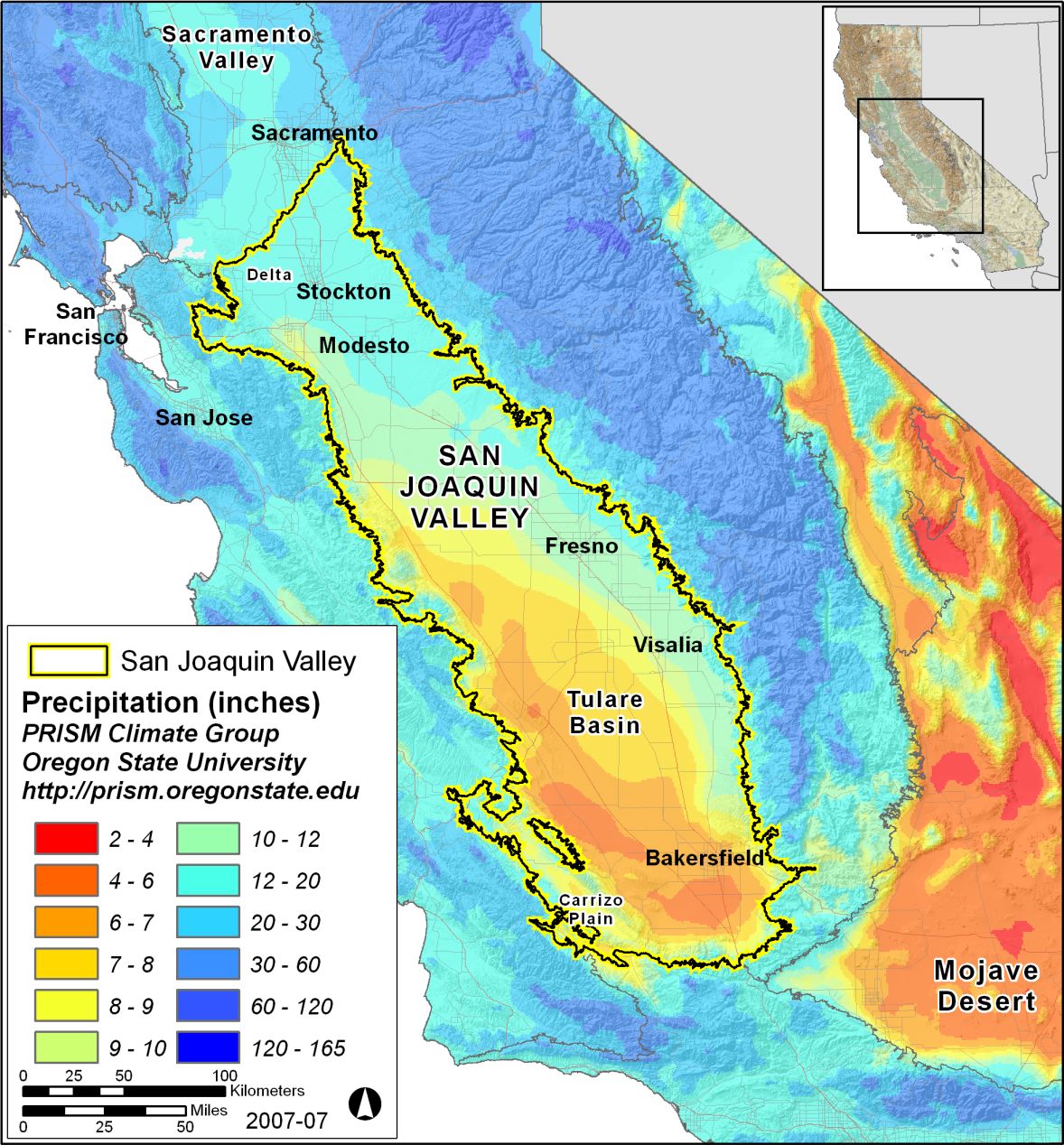
centralvalley_sjv_tub_climate

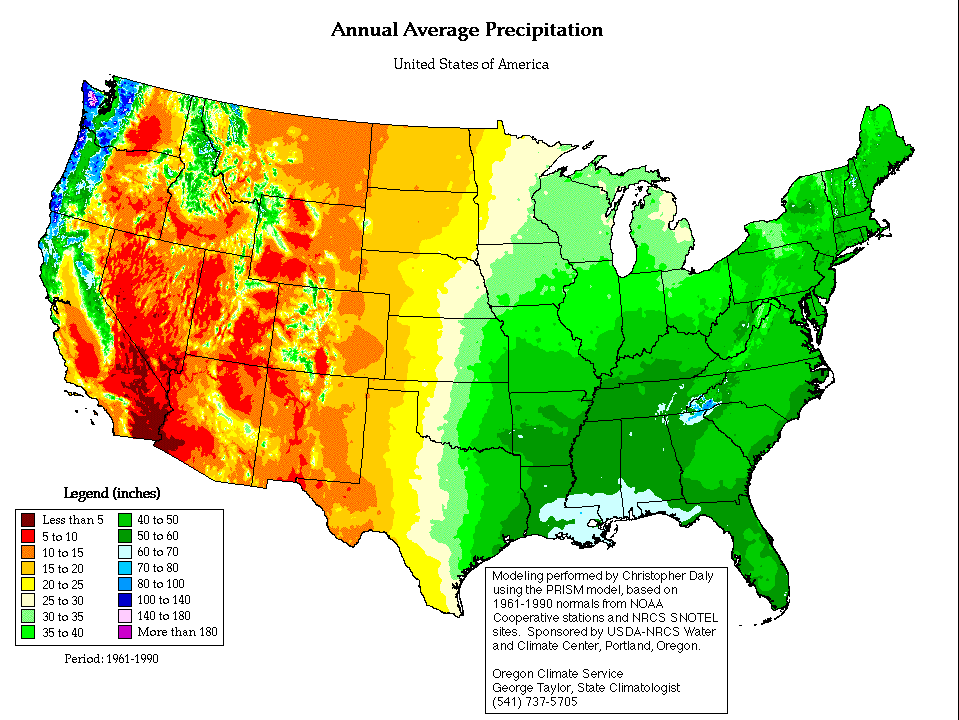
us_precip

The drought is real in California, its end is nowhere in sight. And while farmers didn’t stop the rain, longstanding agricultural policies and practices exacerbated the long-predicted crisis.                                                              

The San Joaquin Valley didn’t become “the nation’s salad bowl” on its 15 inches of annual rain. It took massive irrigation projects and the diverted waters of the Colorado River to make the southwestern desert bloom. And it is one more testament to what Marc Reisner, in Cadillac Desert, deemed “the West’s cardinal law: that water flows toward power and money.”


Farkhunda

“When are you going to write about Farkhunda?” my daughter Gayley asked me. Today.

I hadn’t written about the 27-year-old woman who was beaten to death two weeks ago in Kabul because I had nothing to add to yet another story of murderous fanaticism and the diminished lives of women in the Middle East. This one seemed particularly horrific: I pictured a deranged woman wandering in rags, muttering incoherently, maniacally setting fire to a book, suddenly set on by a frenzied mob.

Like too many news stories these days, everything I knew turned out to be wrong. Everything and yet nothing. Farkhunda was not mentally ill, although her terrified family said she was. She was a law student who became incensed at the behavior of mullahs selling worthless charms to the gullible poor. She condemned the men, was falsely accused, and killed. Another victim.

Then I watched the video: young men with boots, sticks and boulders snuff out Farkhunda, as others cheer, laugh and record her death on their cell phones. It is a celebration.

I don’t know why Farkhunda baited the mullahs in their den. But her life reminds me that women are more than victims in much of the world. From the Mothers of the Plaza de Mayo to Malala Yousafzai to Pussy Riot to the Chinese feminists, they are those with the courage to confront the bullies.

Not long ago we debated women in combat, failing to acknowledge how often they are on the front lines.

“Hoosier Hospitality”

“When I use a word,” Humpty Dumpty said in rather a scornful tone, “it means just what I choose it to mean – neither more nor less.” “What was intended as a message of inclusion . . . was interpreted as a message of exclusion,” said House Speaker Brian Bosma of Indiana’s misbegotten religious freedom law. “Nothing could be further from the truth.”

Who is kidding whom? What other reason was there to pass a law that fixes a problem that doesn’t exist? How exactly are Christians discriminated against in Indiana? It seems to me they run the place. The original bill said precisely what its drafters meant it to say – which was, Garrett Epps noted in The Atlantic, that for-profit businesses (1) have the same religious rights as individuals and churches and (2) are legally protected against private discrimination suits. When Democrats proposed an amendment clarifying that the bill did not permit discrimination, Epps wrote, the majority voted it down.

Then the commercial backlash set in, and everybody backpedaled, blaming language for obscuring their noble intentions and rushing to clarify their own carefully chosen words. Now the lawmakers are congratulating themselves for passing a law that neither condemns nor condones discrimination. Well done, Indiana.

Of course, not everyone’s pleased. “Homosexual Zealots to Christians in Indiana: Back to the Plantation” blares the American Family Association’s website.

Meanwhile, Indiana just convicted a woman from a conservative Hindu family for botching her own abortion and then seeking medical help. The charge was “feticide;” the sentence 20 years.

Breaking News

• This morning Hillary Clinton notified Rep. Trey Gowdy (R-SC) that she will turn over all 60,000 emails from her tenure as secretary of state, including those that were supposedly deleted. She will also give Gowdy’s committee the server from her Chappaqua home and 10,000 additional emails she had forgotten to mention. “I talked it over with Bill,” Clinton said. “It’s the right thing to do. Whatever happens, happens. But I’d rather feel good about myself than be president.” • As temperatures in Tulsa hit the high 80s, Senator James Inhofe pledged his support for President Obama’s blueprint for drastically cutting America’s greenhouse gas emissions. Asked about his apparent about face on global climate change, the chairman of the Senate Committee on the Environment said, “I don’t care what the science says, it’s already pushing 90 degrees down here, and it’s only April 1st. And you know what? It’s not getting any cooler – scientists now say we are facing a ‘megadrought’ – the worst drought in 1,000 years.”

• “I wish I’d known about this sooner,” said Ted Cruz after his first visit to a doctor under his new health insurance plan. “I had no idea. I got an appointment with my own doctor and a low co-pay. This is so much better than Heidi’s coverage at Goldman, Sachs. So how come it isn’t available to every American – just like it is in Canada where I was born?”

 Today President Obama issued an executive order closing Guantanamo Bay.

April Fool’s.

Test of Life

The other day I watched agape on a city street as a young woman rode by on her bicycle, negotiating the considerable traffic, with both hands firmly on her cell phone, texting like a demon. Here was multi-tasking at some sort of ultimate, particularly when you consider that some of the drivers of those passing cars were texting as well. They might even have been texting each other. “Consciously and unconsciously, we have gradually grown accustomed to experiencing the world through disembodied machines and instruments,” writes Alan Lightman, in The Accidental Universe: The World You Thought You Knew. “It is an irony to me that the same science and technology that have brought us closer to nature by revealing these invisible worlds [from DNA to quanta] have also separated us from nature and from ourselves.”

From drone warfare to urban planning, we seek to manipulate a virtual reality from a safe distance, and like the woman on her bike, we are increasingly adept at it. I see Lightman’s irony particularly in education, where students build models of the natural and manmade worlds and then engineer solutions to the messes people have made. They can do this without having to take the time to listen to the cacophonous melodies of a city neighborhood or dip their hands into a stream’s cold water or smell a spring day.

This is the sadness to me of the current debate over educational standards. You need neither empathy nor wonder to pass a standardized test.

Beauty and a Feast

But when thou makest a feast, call the poor, the maimed, the lame, the blind (Luke, 14:13). In Rome the welfare queens don’t drive pink Cadillacs and buy Twinkies with food stamps. Instead, the homeless get private guided tours of the Sistine Chapel and a free dinner at the Vatican’s museum restaurant. This is the Catholic Church’s latest effort to implement Pope Francis’s initiative to reach out to the poor; it follows earlier directives to distribute sleeping bags, build showers, and provide free haircuts and shaves.

To those who think only in economic terms, these may seem inadequate gestures, and they certainly will do little to alleviate the structural burdens faced by the city’s poor. Perhaps the pope is only an enabler, but it’s refreshing to see the homeless treated as something other than a problem to be solved – or, more likely, shunted out of sight so the city can continue the business of gentrifying its tax base. In our own politics of poverty, it’s hard to imagine anyone suggesting that poor people might like to see ageless works of art or enjoy a walk through the papal gardens. And so we dehumanize them, the better not to see them.

This pope named himself after Francis of Assisi, known as Il Poverello (“Poor Little Man”), who is the patron saint of both Italy and ecology, but whose commitment to poverty and the simple life so challenged his own church's hierarchy that no previous pope had dared to take his name.

To Be or Cease to Be

You know the world is absurd when Chinese functionaries, who believe in nothing but their own political survival, denounce the Dalai Lama for betraying Buddhism. Why? The 79-year-old Dalai Lama, who has led Tibetan Buddhists for 64 years, has suggested he may not reincarnate himself, thus ending a line stretching back to the 14th century. Instead of cheering the demise of a sharp thorn in its side, the implacably atheistic Chinese government reacted with fury to this “frivolous and disrespectful” act.

"China follows a policy of freedom of religion and belief,” said a Foreign Ministry spokesman with a straight face, “and this naturally includes having to respect and protect the ways of passing on Tibetan Buddhism" (or as The Wire headlined, “China Will Make the Dalai Lama Reincarnate Whether He Likes It or Not”) – except, of course, the way of the Dalai Lama, who writes with delightful understatement that “no recognition or acceptance should be given to a candidate chosen for political ends by anyone, including those in the People’s Republic of China.”

At a time when people are slaughtering each other in the name of their gods, the image of humorless Chinese bureaucrats fuming over the irreverence of a religious leader known for his sense of humor seems welcome relief. Except, of course, it’s deadly serious. As more Tibetans immolate themselves protesting China’s rule, we are reminded that repression comes in many guises and that fanaticism, whether secular or sacred, is toxic to the human soul.

Mitch McConnell’s War on Air

Sometimes I wonder whether Mitch McConnell used to ask Santa to put a lump of coal in his stocking. He certainly does love the stuff and those who sell it. (They don’t “produce” it; the earth does that.) And while the rest of the world is trying to reduce its dependence on coal, the Majority Leader is on a single-minded crusade to ensure we keep burning as much as we can. It's good for us. According to the Union of Concerned Scientists, an average-sized coal plant annually discharges: 3.7 million tons of carbon dioxide (the equivalent of chopping down 161 million trees); 10,000 tons of sulfur dioxide; 10,200 tons of nitrogen oxides (equal to 500,000 new cars); hundreds of pounds of mercury, arsenic, lead; and on and on.

Last week McConnell wrote all 50 governors, urging them to simply ignore the administration’s regulations aimed at a 30% reduction in carbon emissions by 2030, adding that “the real danger [is] allowing the EPA to wrest control of a state’s energy policy.” This is part of a political and legal counterattack on President Obama’s “war on coal,” and it's not to be taken lightly. Laurence Tribe, Obama’s Harvard Law School mentor, testified that the EPA’s “energy” plan amounted to “burning the Constitution,” an issue likely to appeal to five Supreme Court justices I could name.

But EPA stands for Environmental Protection, not Energy Production, and as the Nixon administration learned 45 years ago, it requires a national effort to safeguard our air and water. We need one now.

Friday’s Question

Here’s today’s question: What's an expat? No, not Vince Wolfork, who signed yesterday with the Houston Texans after being cut by New England. He’s an ex-Patriot. The other kind, the expatriates who live abroad.

I ask because I read two columns this week that raised the question – one in the edgily leftist SiliconAfrica.com and reprinted in The Guardian; the other in the somewhat stodgier Wall Street Journal. Both came to the same conclusion: “Expat is a term reserved exclusively for western white people going to work abroad,” writes Mawuna Remarque Koutonin in SiliconAfrica, echoing Christopher DeWolf in the WSJ, “Anyone with roots in a Western country is considered an expat.”

I suspect I’m not alone in admitting I’d never thought of this distinction before. The Oxford Dictionary defines an expat as, simply, “a person who lives in a foreign country;” Wikipedia as “a person temporarily or permanently residing in a country other than that of their citizenship.” Yet, for all the words we use in America – “immigrant,” “migrant,” "refugee," “illegal alien” (the old term for southeastern Pennsylvania’s mushroom workers) – I’ve never heard “expat.” It’s hard to imagine the 4 million Irish who disembarked on our shores in the 19th century or the Africans who arrived in the holds of ships or today's Latinos being called expats.

Yet, the Journal has a section called “Expat”, a “hub for expatriates and global nomads – spanning the globe in expat hotspots like London, Paris, Hong Kong, Beijing, Sydney and many more."

Divide and Rule

“Right-wing rule is in danger,” Bibi Netanyahu thundered in a video appeal just before the Israeli elections. “Arab voters are streaming in huge quantities to the polling stations.” Some found this offensive. “No other Western leader would dare utter such a racist remark,” tweeted an opposition leader. “Imagine a warning that starts, ‘Our rule is in danger, black voters are streaming in quantity to the polling stations.’”

Imagine. In America? It’s so 1960s Alabama. Instead, we have tried much subtler ways to suppress turnout, such as gerrymandering, long waits at polling places and voter identification laws. Remember when the Pennsylvania legislature passed a series of conservative bills in early 2012? “Pro-Second Amendment? The Castle Doctrine, it's done,” boasted House Majority Leader Mike Turzai. "First pro-life legislation – abortion facility regulations – in 22 years, done. Voter ID, which is gonna allow Governor Romney to win the state of Pennsylvania, done." (For the record, Obama carried Pennsylvania by 5 percentage points. Nationally, non-white voters, who overwhelmingly supported Obama, grew by 4.6 million in 2008 and another 3.6 million in 2012.)

It’s arguable, then, that voter-suppression efforts haven’t worked very well. But the problem is that they, often intentionally, polarize voters along racial and ethnic lines. Netanyahu has vowed never to accept a Palestinian state and to continue building settlements in Palestinian areas. In America we increasingly look at issues, from policing to education to welfare, through the lens of race.

If we talk only to ourselves, instead of to each other, how will we find a common language?

Annie Moore

Yesterday I heard a song called "Isle of Hope, Isle of Tears" on my car radio, a song about Annie Moore, the teenage girl from Ireland who, on Jan. 1, 1892, became the first immigrant to pass through Ellis Island. She was given a $10 gold piece, the equivalent of $200 today. Annie was one of 4 million people who left Ireland for America in the 19th century, and like immigrants everywhere, she carried hopes for a new beginning, even as she left forever her home in a land that had become unlivable. Over a million people died in Ireland's Great Famine, and between 1845 and 1895 death and starvation cut the country's population in half. The Irish came in disruptive, unwelcome droves, overrunning the cities and overwhelming the culture. Catholics in a Protestant country, most spoke no English and almost all were desperately poor. A rural people from a hardscrabble land, they brought few marketable skills, found no welcome mats rolled out, and crammed themselves into ethnic slums.

Annie married Joseph Augustus Schayer, the son of German immigrants, with whom she had “at least eleven children,” and so for her the process of assimilation – the “melting pot” – began almost immediately.

Yesterday, the descendants of those millions of immigrants celebrated their history as both Irish and American, and on Boston’s 114th St. Patrick’s Day Parade, its organizers, the South Boston Allied War Veterans, at last lifted their ban and invited gay and lesbian groups to march.

The melting part enlarged, I think of Annie smiling.

Hard Time and Hope

The misconception of totalitarianism is that freedom can be imprisoned. This is not the case. When you constrain freedom, freedom will take flight and land on a windowsill.” So wrote the Chinese artist and activist, Ai Weiwei, whose multimedia exhibit now at Alcatraz invites us to think about freedom and imprisonment, crime and conscience, art and dissent. Indeed, @Large is dedicated to all those everywhere who have been deprived of their freedom for speaking out. We don’t think of Alcatraz, which housed America’s most brutal criminals, as a place for prisoners of conscience – although Hopi men were sent there in the late 19th century for refusing to send their children to government boarding schools. But Ai, who was arrested in China and held secretly for 81 days (the charge was tax evasion, the same charge that landed Al Capone on the Rock), shows us the power of freedom in a world filled with prisons.

Yesterday I met a young man from Eritrea, whose brother, a journalist, was arrested 14 years ago for criticizing the government – and who himself was imprisoned, when still in high school, for talking openly about his brother. After his release he walked for two weeks until he reached the Sudan border, where he was kidnapped and held for the ransom of his body parts. His father, who had escaped to Boston many years ago, paid the ransom, and the young man is now here and hopeful. He does not expect to see his brother again.

Bananas

And we thought all the wackos were in the House. The completely bizarre “Open Letter to the Leaders of the Islamic Republic of Iran,” dated March 9th and signed by 47 Republican senators, should put that quaint notion to rest. The letter seeks to undermine ongoing nuclear negotiations by helping Iran’s unnamed leaders understand the American constitutional system, including the length and limits of presidential and senatorial terms. Such as: “Applied today, for instance, President Obama will leave office in January 2017, while most of us will remain in office well beyond then – perhaps decades,” a truly terrifying thought. The condescending letter reads like a misguided middle-school social studies assignment. (“Write a letter to the leaders of a foreign country describing our system of government.”) Never mind that it describes our system incorrectly or that the senators' knowledge of Iran apparently doesn’t include who should actually get their letter. Bibi Netanyahu told them all they needed to know about the ayatollahs just last week.

In related news, Senate Majority Leader Mitch McConnell, wrote an op-ed piece in the Lexington Herald-Leader urging states to refuse to implement federal environmental regulations, which only goes to show that the Iranians aren't the only political leaders who don't understand our Constitutional separation of powers.

All their extracurricular writing assignments and lawsuits have left our legislators very little time to pass actual laws. But fear not, no matter how dysfunctional our government may seem, we still import bananas, so we aren't a “banana republic” yet.

Big Corn

Only 610 days left until Election Day, and the pace is heating furiously in Iowa, whose caucuses are supposed to foretell the political fortunes of presidential aspirants and unlock the wallets of big donors – all to send 1% of the delegates to the national conventions. The 2016 campaign kicked off last week when a very rich “agribusinessman” named Bruce Rastetter summoned Republican candidates to Des Moines to talk about the Renewable Fuels Standards, an issues that barely registers on the GOP’s national radar but is a multi-billion dollar industry in Iowa. It’s also an example of how efforts to cut fossil-fuel emissions are hijacked by big business, given huge bi-partisan government subsidies (see, we can work together!), turn into perversions of their environmental intentions – and caused Republican hopefuls to tap dance around their core beliefs (market-based solutions, small government, and fossil fuels as the salvation of America).

Why just last week, Senate Majority Leader Mitch McConnell, speaking on behalf of Big Coal, called on states to simply reject “so-called ‘clean-power’ regulations [that seek] to shut down more of America's power generation under the guise of protecting the climate.”

But out in Iowa they were singing a different tune, talking about the great benefits of planting the state from Davenport to Sioux City in one vast monoculture of subsidized corn. Only Jeb Bush and Ted Cruz demurred. But before we heap praise on Cruz for not “pandering,” it’s worth noting that in Texas Big Corn takes a back seat to Big Oil.

L’Etat? C’etait Moi!

Or as Hillary might have put it: “What do you mean I had to have a government-issue email address like some common bureaucrat? I was State!” And so we learn that Hillary Clinton didn’t use her government email account during her entire tenure as secretary of state. This week her lawyers handed over 50,000 pages of her personal emails, generously suggesting, The New York Times reported, they were “motivated by efforts to update the department’s record management system.”

According to news reports, access to clintonemail.com – which was headquartered, not at Foggy Bottom, but in Chappaqua, NY – was a sought-after status symbol. One person who had such access was Huma Abedin, Hillary Clinton’s long-time confidante and protégée. Abedin was a part-time advisor to the Secretary of State, while holding – but not necessarily reporting – three other paid consulting gigs: The Clinton Foundation; personal assistant to Hillary Clinton; and Teneo Holdings, a powerful “global advisory firm” with close ties to, um, the Clintons.

We are “not a lobbying firm,” Teneo explains on its website. “However, our experience helps us understand how decisions are made that affect our clients’ businesses. In the US, we use our deep relationships to provide strategic counsel and help clients navigate policy debates in Washington and state capitals as they look to find support, amplification and clarity around the issues that they care about.”

In other words, we’re a lobbying firm.

Ah, language: "It depends on what the meaning of the word 'is' is.”