Feeling the Burn in Philadelphia (2016 Campaign Series)
How hot was it in Philadelphia this week?
Read MoreHow hot was it in Philadelphia this week?
Read MoreThe reason we are doing better economically than most countries, Senator Chris Murphy (D-CT), told the German Marshal Fund of the United States yesterday in Philadelphia, is “because we remain a very young work force. Why? Because of immigration.”
Read MoreThe Republicans set the bar so low last week in Cleveland that it seemed impossible that anyone could go lower – but the Democrats are off to a bad start, with another email scandal and the tooth-pulling resignation of party chair Debbie Wasserman Schultz – long overdue in the opinion of Morning Joe’s Mika Brzezinski (and me).
Read MoreCompeting protest groups shared the same square, hurling vitriol and insults at each other, with what almost amounted to gleeful banter. Many of the protests had the air of well-rehearsed theater, although it takes only a tiny spark to ignite a fire. And Ohio is is an “open carry” state.
Read MoreIn much of southwestern Pennsylvania where I traveled, Black Lives Matter is seen as little more than a license to shoot police officers. To Precious Brown, a 17-year-old rising high school senior in Youngstown, Ohio, it is something else entirely.
Read More“Both parties are dysfunctional,” said Bob Hollick, a former Democratic township supervisor in Washington County. “We need to blow things up. The politicians are just taking people for a ride – and lining their pockets.”
Read MoreIt’s 65 miles from the site of the Great Flood to that of the Battle of Homestead, “the deadliest clash between workers and owners in American labor history.”* Two men featured in both events: Andrew Carnegie and Henry Clay Frick.
Read MoreThe drive from Hershey, Pa. to Johnstown, is just under three hours, but as you travel from “the sweetest place on earth,” where street lamps are shaped like kisses and hotels hand out chocolate bars with your room key, to the site of America’s most disastrous flood, which a few years ago was named the least likely city in America to attract newcomers, you cross a great divide.
Read More“The problem of the twentieth century is the problem of the color line,” W.E.B. Du Bois, The Souls of Black Folk (1903). Du Bois wrote that line 113 years ago to demonstrate that Black lives matter. Well into the 21st century, how far have we come?
In the wake of Dallas and Minnesota and Louisiana, I believe we can still become what Lincoln called “the last best hope of earth” – a far nobler ideal than to make America great again.
I believe it because the language of equality is in our DNA. And although we have lived a lie – exterminating Native Americans, enslaving Africans, abusing immigrant laborers, imprisoning our people – we have never abandoned the language of our American creed. And while that makes us exceptional hypocrites, it also gives us the foundation for joining together.
We have said it over and over again.
John Winthrop said it in 1630: “For we must consider that we shall be as a city upon a hill. The eyes of all people are upon us.”
Thomas Jefferson said it in 1776: “We hold these truths to be self-evident, that all men are created equal, that they are endowed by their Creator with certain unalienable rights, that among these are Life, Liberty and the pursuit of Happiness.”
Abraham Lincoln said it in 1863: “Four score and seven years ago our fathers brought forth on this continent, a new nation, conceived in Liberty, and dedicated to the proposition that all men are created equal.”
Martin Luther King, Jr. said it in 1963: “I have a dream that one day this nation will rise up and live out the true meaning of its creed: ‘We hold these truths to be self-evident, that all men are created equal.’"
Barack Obama said it in 2009: “The time has come to reaffirm our enduring spirit; to choose our better history; to carry forward that precious gift, that noble idea, passed on from generation to generation: the God-given promise that all are equal, all are free, and all deserve a chance to pursue their full measure of happiness.”
How many times do we have to say it before we make it come true?
“It is almost always the cover-up rather than the event that causes trouble.” Sen. Howard Baker (R-Tenn.) in the aftermath of Watergate. The disquieting image of two private jets on the tarmac in Phoenix: plush capsules that transport the powerful who seem ever more insulated from the rest of us 30,000 feet below; the 30-minute visit to discuss grandchildren and golf that was handled with more attention to secrecy than some state department documents; the silence until questions were raised by the press.
Thank God for the press.
So it goes with the Clintons, who first came to Washington on behalf of ordinary people “who work hard and play by the rules,” and who long since began behaving as if the rules don’t apply to them.
And so it is with the emails. It’s not the numbers: 110 of 30,000 (0.4%) were classified; 12 (0.04%) were top secret. It’s the gall – the evasions, the untruths, the stonewalling, the decision to move headquarters from Foggy Bottom to Chappaqua in the first place.
And the silence. Yesterday Hillary Clinton’s campaign announced a college-tuition plan, and while I’m all for getting back to the issues, ignoring the Comey report is not taking her campaign to a higher level.
She is already too much above the fray, too disengaged from the people she seeks to serve. She needs not just to “take responsibility” but to take ownership of this tawdry mess.
Because this is the kind of political behavior that gives license to demagogues.
In case you hadn’t noticed.
The moons have mythical names: Calisto, Europa, Io and Ganymede, whom Homer called the most beautiful of the mortals, the four largest moons orbiting around Jupiter. Last night they were joined by Juno, the solar-powered spaceship NASA launched almost five years ago, which went into orbit a few minutes before midnight. After traveling 1.7 billion miles at speeds up to 1650,000 mph, Juno arrived at the precise spot the scientists in Pasadena had programmed. Sometimes it’s easy to feel discouraged about the fate of the earth and the future of its people, who treat both the earth and each other with such carelessness. Where America is embarking on an ugly election campaign to elect a leader the majority of voters abhor. Where we build walls and fences topped with razor wire to keep out the undesirable, and where ISIS celebrates the slaughter of innocents.
But think also of the things of which we are capable when we set free our imaginations, follow our sense of wonder and expand our horizons. When we come together around a project – which will take years to complete – to explore the outer reaches of our solar system.
None of this solves the problems we face daily. It doesn’t stop the killing or feed the hungry. It doesn’t relieve the anxieties of the fearful or open the hearts of the angry or tear down the walls that keep us apart.
But today I think of Juno, out beyond the heavens, touching what Lincoln called “the better angels of our nature.”
On Wednesday I went with three other old white men to my first Trump rally, in Bangor, Maine, fully expecting to exemplify the demographics inside the Cross Insurance Center. That was our first surprise. The crowd, which grew towards 5,000, included many younger people, women, children and entire families. All were handed Trump posters to wave, and the atmosphere was more festive than angry. We were all white people, however, which isn’t surprising in a state where African Americans and Latinos each comprise 1% of the population.
Read MoreAbove all, it seems to me, the British vote to leave the European Union, and the tidal waves of analysis and soul searching that have followed, point to conflicting definitions of community.
Read More“A lifelong Republican, my complete and utter disgust at Donald Trump moved me to write a check to Hillary Clinton! It will be the first election, during the 45 years of my marriage, that my wife and I will pull the same lever.” We read so much (including, it’s fair to say, from me) about Trump the divider, the relentlessly negative bully who mocks anyone who gets in his way. The two-sentence note above from a college classmate got me thinking differently. Here, for example, is a couple who have been married for 45 years and never once agreed on their presidential candidate – until Trump brought them together.
And think of all the other people he’s unifying: Latinos, African Americans, women, young people – large numbers of whom are put off by Trump's nasty, divisive, demagogic rhetoric. He even united me with an old Republican friend I hadn’t seen in decades.
One other thing about my friend’s note: despite their longstanding political differences, he and his wife are still married after 45 years. They like each other even though he’s a Republican, she’s a Democrat. Forty-five years ago that wasn't so unusual.
Indeed, isn’t that how it’s supposed to be in a democracy? Oren Hatch and Ted Kennedy, senators of vastly different opinions, were close friends for years. Ronald Reagan and Tip O’Neill amiably tried to work through their disagreements over amber-colored libations.
Different groups joining together in search of a consensus – isn’t that what the founders had in mind for America?
Who knows? Maybe Donald Trump is the consensus we’ve been waiting for.
In Acadia National Park, which is about to turn 100, the streams are abnormally dry, the waterfalls unseasonably quiet.
Read MoreRadical Islamist Terror. Why won’t Barack Obama say those three words? His failure to do so, I read, is why we are forever vulnerable to attack from radical Islamic terrorists. And his failure to do so keeps alive all the whispered conspiracy theories about his background, his motivations, his true beliefs. It’s clear that many of the terror groups with whom the U.S. is engaged are driven at least in part by their Islamic identity. Scott Atran, a French and American anthropologist and a leading authority on terrorism, contends that, however brutal and repugnant ISIS is to us and most Muslims, it speaks directly to people who “yearn for the revival of a Muslim Caliphate and the end to a nation-state order the Great Powers invented and imposed.”
But, he notes, “what inspires the most lethal terrorists in the world today is not so much the Koran or religious teachings as a thrilling cause and call to action that promises glory and esteem in the eyes of friends.” Or, in the case of lone-wolf mass killers, an outlet for their murderous anger.
If Islam provides a rationale for terrorism, why not just say so? And then why not also say that the Baptist pastor who said from the pulpit that “the tragedy [of Orlando] is that more of them didn’t die” speaks for Christianity? Or the KKK practices Protestant terror? Or the Revolt, which seeks the creation of a Jewish kingdom based on religious laws and expulsion of all non-Jews from Israel, Jewish terrorism? After all, that’s what they are.
But it is also what they are not. These groups want us to believe they speak for their religions. But they don’t, and Obama is right to say so.
“When I use a word,” Humpty Dumpty said, in rather a scornful tone, “it means just what I choose it to mean – neither more nor less.” “The question is,” said Alice, “whether you can make words mean so many different things.”
“The question is,” said Humpty Dumpty, “which is to be master – that’s all.”
Lewis Carroll, Through the Looking-Glass
A lot of the attacks on Donald Trump miss the point. By labeling him a racist, a misogynist, a nativist, they play into his strength, which is character assassination, and very few people can play that game like the presumptive Republican nominee.
Trump may well be all those things, and then again he may not. And that is the dangerous point. He is whatever he pleases to be, whatever he thinks will get him the most attention and the most adoration from his base. A racist? Don King endorsed me. A misogynist? “I’ve hired a lot of women for top jobs.” A nativist? “And you know, the Latinos love Trump and I love them.”
Most of us choose words to try to make our meaning clear. But Trump uses words that send a message and enable him to him to deny it at the same time – such his infamous description of Gonzalo Curiel, the U.S. District Judge overseeing two class-action lawsuits brought against the defunct Trump University: “The judge, who happens to be, we believe, Mexican, which is great.”
Here is a sentence (it’s actually not a sentence, but never mind) that means nothing, can easily be denied (“I never said I believed”), and isn’t true (Judge Curiel was born in Indiana). Trump, the straight talker, attacks by innuendo – and we all know where he is going.
This is the language of demagoguery: "Make the lie big, make it simple, keep saying it, and eventually they will believe it."
We don’t have time to mourn the dead. Tragedies such as the carnage in Orlando should bring us together to grieve for those who died, to pray, however we pray, for the wounded, and to support those whose lives have been devastated. But we don’t have time. Too quickly we turn human tragedies into political events, into opportunities to advance our own agendas, to reinforce our hardening divisions. Yes, I believe we must ban assault weapons and pass sensible gun laws. But I don’t need an email from moveon.org asking me to sign a petition before the dead have even been identified.
I believe we need to confront the evil that is ISIS. But I don’t think we need calls for the president to resign because he won’t say, “radical Islam,” two words that have become, like so much else these days, politically loaded.
I believe it matters that the victims were gay and that they were killed celebrating life in a nightclub called Pulse. But more importantly, they were people whose lives ended horrifically and unexpectedly.
We should stop and grieve together for those people, at least for one day, and not just rewrite Monday’s speech to score a point. This is a time to put our differences aside and come together.
Today is the birthday of William Butler Yeats, the Irish poet and revolutionary. On this morning’s Writer’s Almanac, Garrison Keillor read a Yeats poem. It’s called The Sorrow of Love; its last stanza seems applicable to today.
And now the sparrows warring in the eaves, The curd-pale moon, the white stars in the sky, And the loud chanting of the unquiet leaves, Are shaken with earth's old and weary cry.
This morning’s paper brought news of the sudden death of Dennis McCullough, a doctor who pioneered the “slow medicine” movement, which seeks to let elderly patients live out their last days as they wish to, instead of as the recipients of well-meaning medical interventions – what my mother called “heroics” – aimed at prolonging their often-lonely and anguished lives. He chronicled his own path to enlightenment in his book, My Mother, Your Mother. I recognized the name. Dennis McCullough was my classmate at college, where we had a nodding acquaintance. Raised by a single mother on welfare in a poor mining community on Michigan’s Upper Peninsula, he went on to captain Harvard’s hockey team and graduate from Harvard Medical School. He died in Bar Harbor, Maine, just down the road from where I write, where he had come to a conference of community nurses to talk about slow medicine.
His description of his mother crying out, near the end of her life, “Why is dying so hard?” reminded me of my own mother asking, in both bemused wonder and exasperation, “How did I get to be so old?” She no longer wanted to be “encouraged” to walk painfully down the hall, to eat food she’d never liked, to be awakened when all she wanted to do was live in her dreams. As my sisters and I came to understand that, we watched her anger turn into acceptance, and we had some of our best moments together in the little time she had left.
I wish I’d known Dennis McCullough better. I think Mum will like him.
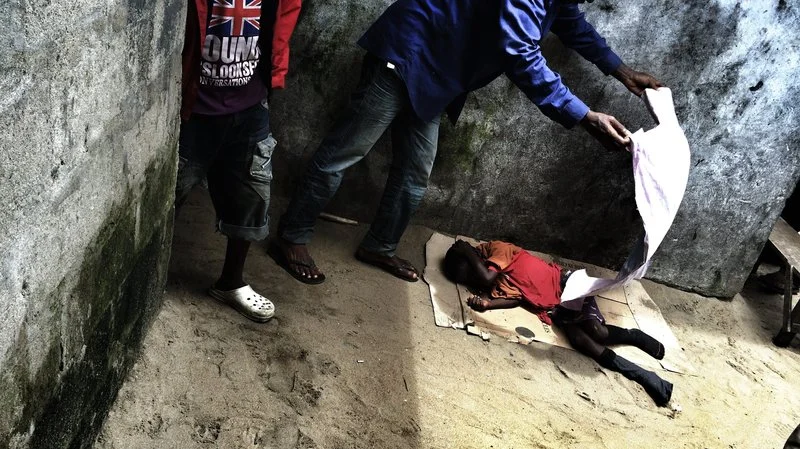
Colleagues called him “Smiley” because he almost never smiled.
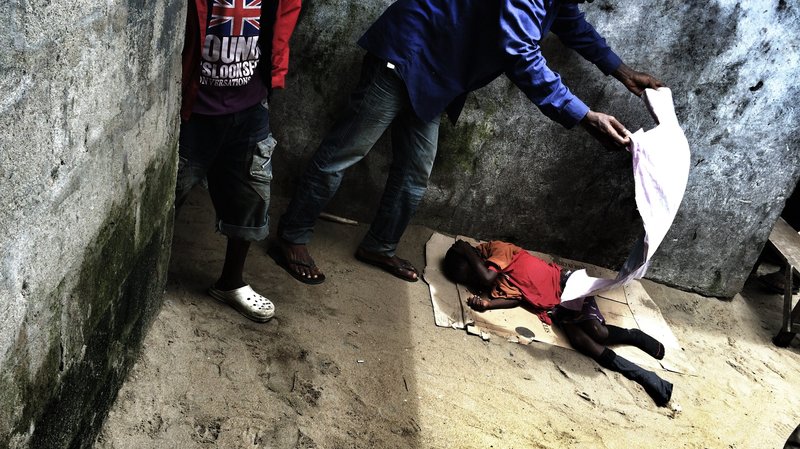
David Gilkey, a photographer for NPR, died Sunday in southern Afghanistan when the Taliban ambushed the convoy in which he was riding and incinerated his vehicle with a rocket-propelled grenade. He was 50 and had covered conflicts around the world, as well the earthquake in Haiti and Ebola in Africa.
As the presumptive Republican nominee ratchets up his denunciations of the press, calling its practitioners “sleazes” and “unbelievably dishonest”, let’s remember Gilkey and Afghan interpreter and journalist, Zabihullah Tamanna, who were killed while embedded with Afghan Special Forces in one of the world’s most dangerous places. They were seeking to tell a story they believed was important and largely untold. And they knew the dangers. Gilkey and Tamanna brought the number of journalists killed since 1992 to 1,193.
After covering the 2010 earthquake in Haiti, Gilkey said: “It’s not just reporting. It’s not just taking pictures. It’s do those visuals, do the stories – do they change somebody’s mind enough to take action?”
And there is the fine line of good journalism. You don’t risk your life, time after time, simply to entertain. You do it because you believe that the stories need to be told, that the images need to be seen. So you go where others can’t or won’t in the hope that you can arouse an often indifferent world. And in the case of David Gilkey, you send back images that evoke, not just the horrors of war, but the pathos of our common humanity.